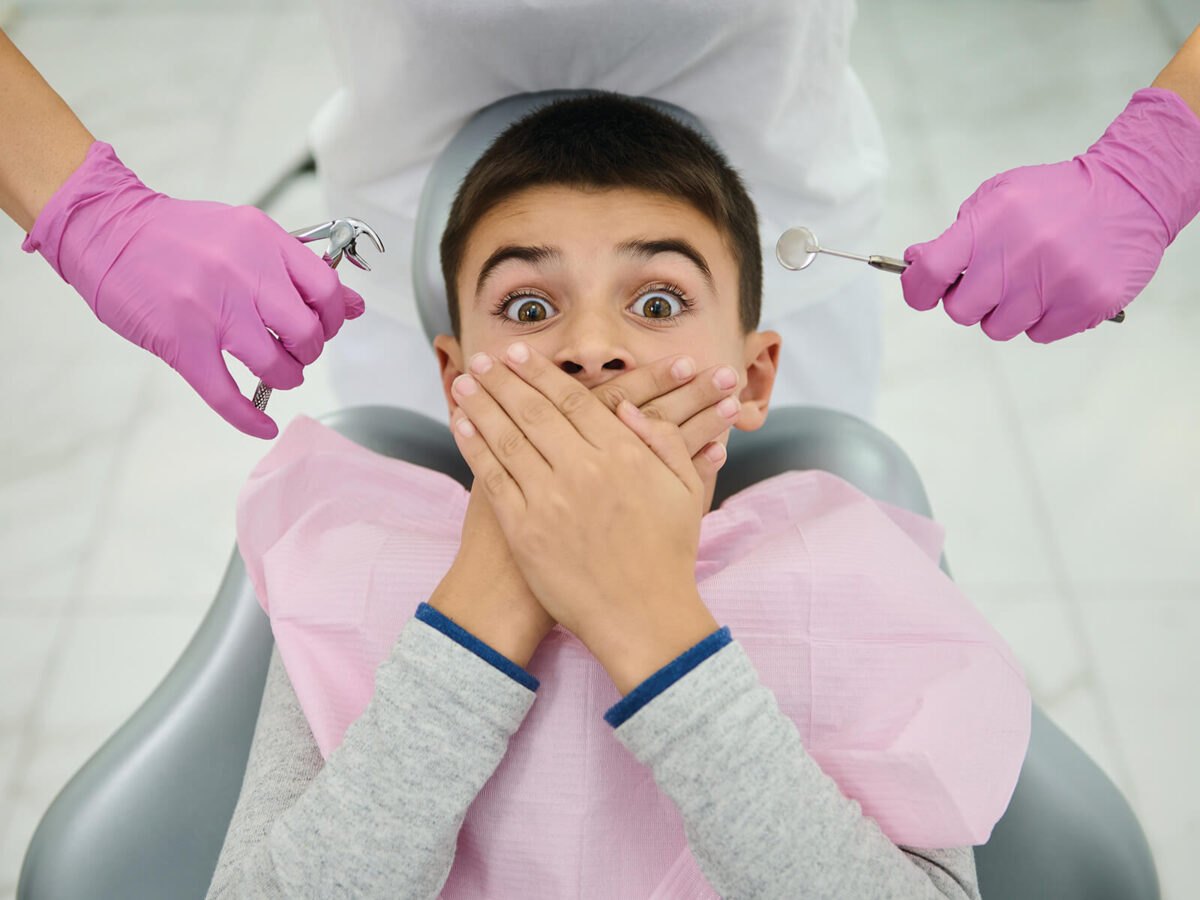
It is perfectly reasonable for a child to have apprehension when going to the dentist for the first time or even the first few times. Why do children become fearful of going to the dentist? It’s a new place; there are musical tools around, and people you don’t know try to stick their fingers into your mouth. As simple as it may be, even grown-up people may not feel comfortable about it sometimes.
Why Kids are Afraid To Go to the Dentist
Indeed, there are multiple reasons for which children might be afraid to go to the dentist. Naturally, as grown-ups, we cannot find them very rational, but for a child, they are genuine and must be addressed with understanding.
Here are some reasons why children have dentophobia:
- Afraid of pain
- Noise from dental instruments
- Fear of the dentist
- Suffered an instance that triggered the element of fear and anxiety.
- Syringes and other equipment may be required to treat the parts in the mouth.
These are just a few of the many reasons your child may have dental fears. The best thing to do is to try to engage your child in a conversation to establish her fears.
Tips To Overcome Children’s Fear Of The Dentist
Take Your Child to Pediatric Dentists
The pediatric dentist is a kind of dentist who exclusively attends to children’s dental care. They are the general practitioners of dentistry. The pediatric dentist receives two to three years of specialty training after dental school to only treat children and adolescents. Dental specialists for children are thus more knowledgeable about children than general dentists and their requirements.
Reinforcements rather than threats
Many of us have seen our parents using a lot of pressure to make the reluctant kid brush his teeth well, pointing at the Dentist as the alternative. Perhaps you have heard a parent telling a child that he/she cannot have candies because it would anger the dentist, or the dentist would know that the child has not been flossing.
If you tell your children that you will take them to the dental office, they grow very frightened whenever the time comes to go.
But many of us are parents, and it can be very frustrating when you can barely get your kids to listen to you without them turning around and listening to someone else instead.
To further support the development of confidence in your children, you may discuss how much the dentist would be amazed at the good behavior of your children.
Schedule Regular Dental Checkups
Children who have dental phobias are required to attend the dental clinic frequently to be able to conquer their phobias. Although it is not necessary to attend monthly, ensure that you have a routine of dental checkups after every six months.
Such a schedule helps the child become familiar with the dentist, office staff, and even the building where the dentist operates. That way, the child feels comfortable with the surroundings and develops feelings of safety at that place when they visit a dentist.
According to the American Dental Association, a child should see a dentist within six months of getting the first tooth or before his/her first birthday. Because early visits set a child’s potential oral health status and help a dentist recognize issues before they worsen, so early visits are more favorable.
Bring a toy or another object that the child likes to the dentist’s appointment
Familiar items such as a favorite stuffed animal or a small toy can provide comfort when the child is stressed or frightened. One can take some time to schedule a call to the dentist’s office before the visit to explain the child’s anxiety and enquire if one can bring the said item. Sometimes dentists may have toys or teddy bears that the kids can hold during the procedure.
Read stories or play games that feature going to the dentist
One of the fun activities that can help a child cope with stress or anxiety is to act out a dentist visit within the home. Luckily, there are numerous toy dentist toolkits to aid you. You can also read about visiting the dentist in story books, especially when the child is anxious.
Plan some fun activities for the day after the dentist
Please avoid making dental visits the focus of the day. It is advisable to take your child to the dentist early in the day and find an activity that rewards them but is also directly after the dentist. It is a good idea to remind the child about the event in the coming week, whether going to the pool or visiting grandparents. Tick them with the thought that the dentist is just a part of their way to where they want to go, and they will feel much better about it.
Summing It Up
Fear in children, particularly of dentists, is always a cause of concern to parents since they do not understand why their children are so afraid of dentists. Sometimes, it is not easy to comprehend why children are scared and just how one can assist them in overcoming their fears. At our Riverwalk Dental Potranco clinic, we aim to ensure that all our patients fully overcome their dental phobia and enjoy a healthy mouth with shiny teeth. We tend to be patient-oriented when it comes to the delivery of dental services or treatment