Blog
Dental hygiene tips for healthy teeth & gums
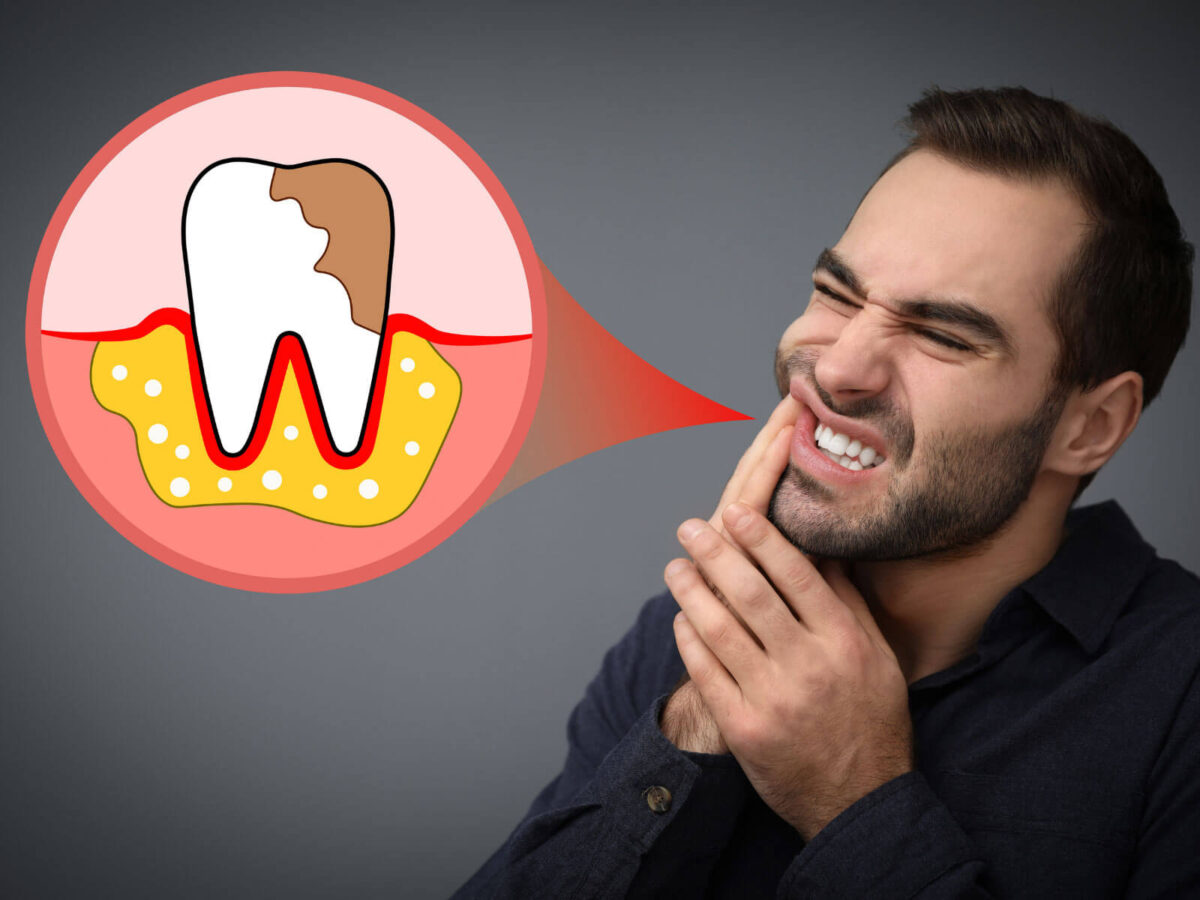
Signs of Infection After a Root Canal: When to Call Your Dentist
My lower right molar had a root canal about 3 years ago. But just last winter, it started aching again, and the ache immediately felt familiar.
Twenty years of telling patients about signs of infection after a root canal, and I still spent four days convincing myself it was probably nothing. Sinus pressure, maybe. A cold coming on. It wasn’t.
Most root canals hold. Pooling 42 studies published from 2003 – 2020, researchers landed on a 92.6% success rate under looser healing criteria. 82% if you demand the lesion resolve completely on the X-ray. Somewhere in the gap between those two numbers sits every tooth that reinfects, and mine turned out to be one of them.
TL;DR
- Pain that returns after healing, or never fully settles, is the earliest real warning sign.
- A small bump on the gum, a fistula, means an active infection is draining somewhere.
- Swelling past five days, or spreading toward the face, needs urgent attention.
- A tooth that darkens or loosens over time can point to failure happening underneath.
- Retreatment saves most failed root canals, and extraction only comes into it once everything else has been ruled out.
What I Actually Felt First
It started as pressure when I bit down. Not pain exactly, more a dull awareness that something in that quadrant was different from the rest of my mouth. I ignored it for three days the way patients ignore it for three months.
Day four is when cold water reached it. A tooth with a root canal has no nerve left to respond to temperature, so feeling anything at all told me the problem had moved beyond the tooth itself and into the tissue around the root.
That’s the distinction I’d want anyone to take from this. Soreness in the days right after treatment is your body healing. An ache that arrives three years later is your body telling you something has gone wrong underneath.
What Are the Clearest Signs of Infection After a Root Canal
The full list of signs of infection after a root canal runs long on paper, but a handful of symptoms do most of the diagnostic work. Persistent or returning pain sits at the top, particularly pain that fires when you bite down on that specific tooth.
Swelling comes next. Sometimes it’s a slight puffiness in the gum you’d only notice with your tongue, and sometimes it’s obvious in the bathroom mirror. Mayo Clinic’s overview of tooth abscess notes that an untreated infection in the pulp can progress into swelling of the face, cheek, or neck, which is the stage nobody wants to reach.
Then there are the quieter signals. A metallic taste that brushing doesn’t shift, a tooth turning grey against its neighbours, a feeling that it sits slightly loose in the socket. Any one alone might be nothing. Two together earn a phone call.
What Is a Fistula and Why It Matters
Mine never developed one, though I’ve treated plenty that did. A fistula is a small bump on the gum near a treated tooth, and patients regularly walk in describing it as a pimple that won’t go away.
What it actually is: a drainage channel. Pus from the infection at the root tip has tunnelled through the bone and found an exit through the gum tissue. Unpleasant to look at, and useful to know about, because it means pressure is escaping rather than building somewhere you can’t see.
A fistula rarely stays put. It might shrink away to nothing for a couple of weeks before surfacing again in the same spot. Patients read the disappearance as healing. What it really signals is an infection that has paused its drainage, not one that has resolved.
Something Feel Off Around a Treated Tooth?
Get it checked before a small ache turns into something bigger.
When Does Swelling Cross Into an Emergency
It is very common to have a bit of tenderness for a few days right after treatment. Swelling that stays past five days, or starts spreading, has moved into different territory.
Upper teeth carry an extra complication. The roots of the upper molars sit close enough to the maxillary sinus that Cleveland Clinic’s guidance on tooth abscess notes infection in that area can spread into the sinus cavity itself.
A low fever under 100°F for a day or so after treatment isn’t unusual. Anything higher, arriving alongside facial swelling or difficulty swallowing, belongs in an emergency room the same day.
What Do Root Canal Failure Symptoms Actually Look Like
Root canal failure symptoms rarely announce themselves on schedule. Mine surfaced three years after the procedure, which is unremarkable in practice. Failure can appear within weeks or stay quiet for well over a decade.
The mechanism is almost always the same. Bacteria find a route back into a canal system that was sealed the first time properly. A crack in the tooth does it. So does a crown fitted months late, or decay working its way in under the margin of an old filling.
Mine was a hairline crack running under the crown. Invisible on the surface, invisible on the first X-ray, and only confirmed once my endodontist looked at it under magnification.
What Root Canal Retreatment Actually Involves
Root canal retreatment is roughly what the name suggests. Your endodontist reopens the tooth and starts by removing the old filling material from the canals. Then, they proceed to disinfect the whole system again and seal it a second time.
It feels like starting over because in most respects you are. The upside is that it keeps your own tooth in your jaw, which no implant or bridge quite replicates, however good the work is. Success rates run a little below a first-time root canal and still hold up well for the majority of cases.
Mine took about ninety minutes, slightly longer than the original appointment. I was chewing normally on that side within a few days.
How Common Is an Abscess After Root Canal
An abscess after root canal treatment isn’t the most frequent way these teeth fail, though it’s the finding that rattles people hardest. It rattled me when a small dark shadow showed up at the root tip on my own X-ray.
Cleveland Clinic describes it as a pocket of pus. This pocket forms when bacteria reach the pulp through a crack or a cavity and travel down toward the tip of the root. The bone around that area starts to break down. This is why it shows up on imaging before you necessarily feel much.
Caught early, it responds well to retreatment. Where the infection sits stubbornly at the root tip, an apicoectomy removes the last few millimetres of root and seals it from the end instead.
Worried About a Root Canal That Doesn’t Feel Right?
An evaluation now beats an emergency visit later.
FAQ
How long after a root canal can infection still show up?
Years. In my case, three of them. Failure isn’t confined to the first few weeks after treatment.
Is some soreness after a root canal normal?
Yes. For a few days at least. Soreness that worsens, or comes back after settling down, is the version worth watching.
Can a failed root canal be saved without extraction?
Usually. Retreatment or an apicoectomy rescues most of these teeth, and pulling it is where you end up only when neither option works.
Does a dark tooth always mean infection?
No. Discolouration on its own is often just the tooth losing its blood supply. Paired with pain or swelling, get it looked at.
Conclusion
I knew the signs of infection after a root canal better than almost anyone walking into my operatory, and I still spent four days talking myself out of getting it looked at. Knowing the list and acting on it turn out to be separate skills.
If a treated tooth starts aching again? It is the time to quickly book the appointment while it’s still a small inconvenience. Mine cost me ninety minutes in a chair. Left another six months, it would have cost me the tooth.
Think Something’s Wrong With a Treated Tooth?
Get it evaluated properly before it becomes a bigger problem.