Blog
Dental hygiene tips for healthy teeth & gums
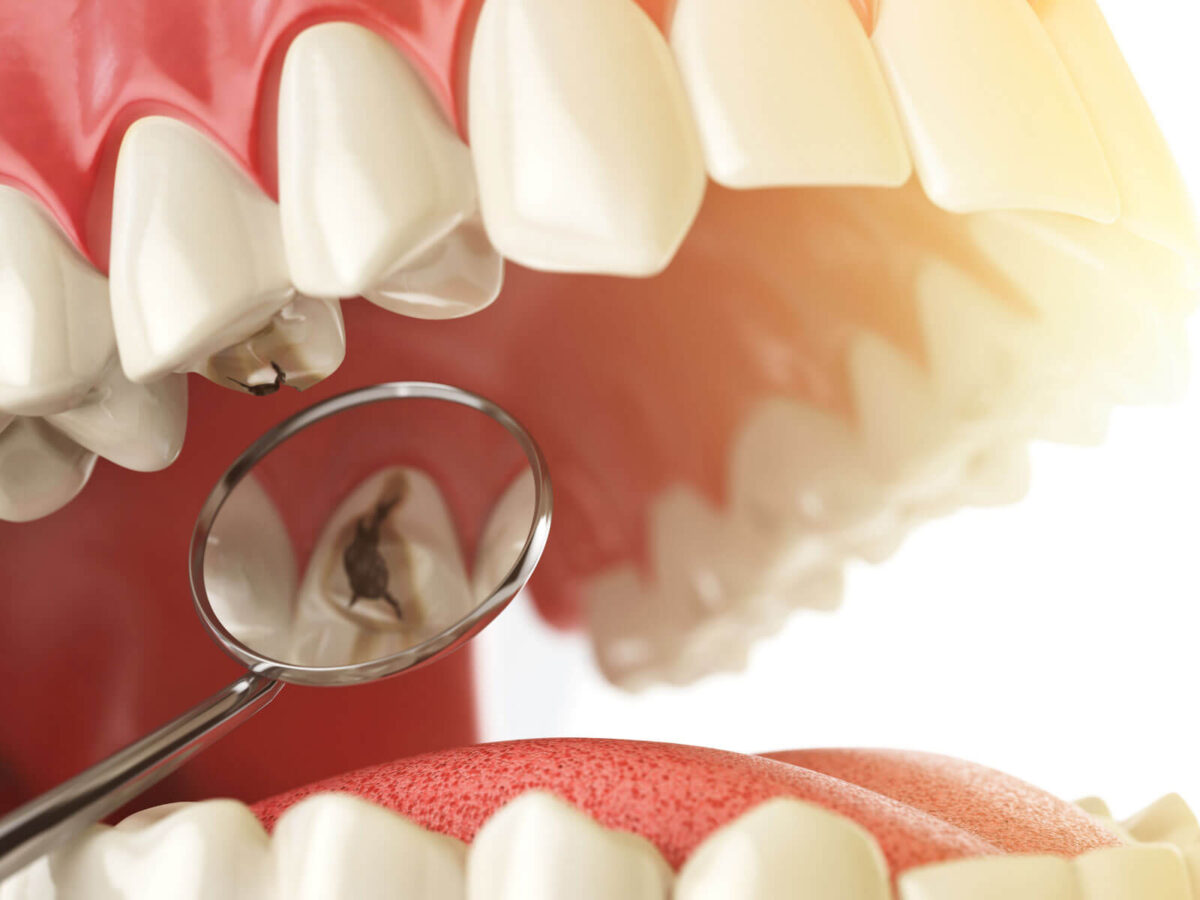
Can You Get a Cavity on a Filling? Signs It’s Happening to You
The most common reaction when a patient finds out they have a cavity around an existing filling is disbelief. They had that tooth filled. It was handled. The idea that a filled tooth could develop another cavity, in the same spot or underneath the restoration that was supposed to fix it, doesn’t quite line up with what most people think a filling actually does.
It comes up in my practice more than you’d expect. “Can you get a cavity on a filling?” is one of those questions patients should really be asking before they find out the answer at an appointment.
TL;DR
- Can you get a cavity on a filling? Yes. The filling itself holds up, but the tooth around and underneath it doesn’t get a pass on decay.
- Recurrent caries starts at the margin. That’s the edge where filling material meets tooth structure. Once that gap opens, bacteria get in. Decay spreads underneath the restoration with nothing on the surface to show for it.
- Dentists probe the margin for softness and review X-rays at every routine exam. Most patients find out at an appointment, not before.
- Age matters. A filling that’s been in place for fifteen years has had fifteen years of wear on that margin.
- Finding it early usually means replacing the filling. Finding it late can mean a crown or a root canal.
Why Filled Teeth Aren’t Immune to Decay
A filling removes the decayed portion of a tooth and replaces it with restorative material. That’s what it does. It doesn’t change the biology of the surrounding enamel, and it doesn’t make any other surface of that tooth resistant to future cavities.
The enamel adjacent to a filling responds to plaque and bacteria the same way it always did. The contact points between the filled tooth and neighboring teeth, the groove running above the restoration, the gumline: these all remain fully susceptible. A new cavity can develop on any of these surfaces independently of where the original filling sits.
What I find myself explaining regularly is that the margin is where the real risk lives. The edge where filling material meets tooth structure is the most specific vulnerability a restored tooth has, and it’s where secondary decay most commonly begins.
What Is Secondary Decay and Why Does It Develop
Secondary decay (recurrent caries) forms at the margin of an existing restoration. It starts when that margin opens.
No filling margin is a perfect seal permanently. Composite resin undergoes slight shrinkage during curing. Thermal cycling, the expansion and contraction of filling material and tooth in response to temperature changes, creates differential movement at the margin over years. Occlusal stress from normal biting, and more significantly from grinding, concentrates at the restoration edges. The result, gradually, is a gap between filling and tooth.
Once that gap exists, bacteria work in. The space beneath the restoration is warm and anaerobic, exactly the kind of environment where decay moves quickly and without any surface signs. The filling above it can look intact. Underneath, the decay is spreading through dentin toward the pulp.
A study via NIH identified secondary caries as one of the leading causes of filling failure and the most common reason restorations are replaced. In my experience, it’s not an unusual finding. Restorations that go years without imaging tend to be further along by the time anything gets flagged.
What Dentists Look for at Every Appointment
At every routine exam, I give existing restorations a specific look.
A probe run along the filling margin checks for softness or stickiness. Intact enamel feels hard and smooth under a probe. When it doesn’t, that’s the margin breaking down.
Visual inspection looks for discoloration, a dark line or shadow at the junction of the filling and tooth that wasn’t there before. Some staining at margins is cosmetic. A shadow that runs beneath the filling or that has spread since the last appointment is a different finding.
X-rays are where secondary decay under a filling gets detected before symptoms develop. A dark area beneath or adjacent to a restoration on a bitewing X-ray is the radiographic signature of recurrent caries. Without imaging, what’s happening under the filling surface is invisible to clinical examination alone.
Older fillings get more scrutiny than recent ones. A composite placed two years ago and a composite placed fifteen years ago are not equivalent in terms of margin integrity risk, even if both look intact on the surface.
Does the Age of a Filling Matter
Significantly. No filling lasts indefinitely, and the risk of secondary decay increases with time.
Composite resin fillings average seven to ten years, though that number shifts depending on where the filling sits and what the patient’s bite is like. A large filling in a back molar on someone who grinds is a different situation than a small filling somewhere low-stress.
Amalgam fillings are generally more durable but aren’t exempt from the same margin breakdown over time. An amalgam that’s been in place for twenty years may have served well, but the margin has had twenty years of thermal cycling and occlusal stress. I monitor those with the same attention as a newer composite.
The Cleveland Clinic notes that filling replacement becomes necessary when wear, fracture, or secondary decay compromise the restoration, and that the timing of that replacement matters, because a failing filling caught early requires less intervention than one that’s allowed to deteriorate to the point of pulp involvement.
What Happens When Secondary Decay Is Found
How involved the treatment gets depends on how far the decay has gone by the time I find it.
When a patient asks “Can you get a cavity on a filling?” and the answer turns out to be yes, what happens next is mostly a question of timing. Early secondary decay at the margin that hasn’t spread can usually be handled by removing the old filling and placing a new one. The tooth loses some structure in the process, but enough remains to support a replacement.
When decay has spread further under the restoration, which is common in fillings that haven’t had imaging in years, a crown is usually what’s needed to cover what’s left after removal.
If it’s reached the pulp, root canal treatment comes first.
Have Older Fillings That Haven’t Been Checked Recently?
An exam and X-rays show what’s happening at the margins before it becomes a bigger problem.
FAQ
Can you get a cavity on a filling?
Yes. The tooth structure around a filling remains susceptible to decay. The margin where the filling meets the tooth is the most specific risk point, and secondary decay at that junction is the most common reason fillings need replacement.
Can you get a cavity under a filling?
Yes. Secondary decay developing beneath an existing restoration progresses without symptoms and requires X-rays to detect before it becomes advanced. By the time it’s symptomatic, it’s usually significantly more extensive than imaging found early on would have shown.
How do dentists find secondary decay?
Through probing the margin for softness and checking for discoloration at the filling edge. X-rays pick up what clinical examination misses, particularly decay that’s already working its way under the restoration.
How long do fillings last before secondary decay becomes a risk?
A lot depends on where the filling sits and what it’s up against daily. Composite fillings average seven to ten years, though plenty go longer. The older the restoration, the more closely I look at that margin – it’s had more time to work loose.
Conclusion
Can you get a cavity on a filling? Yes. And it’s one of the more common findings at routine dental examinations, particularly in patients with older restorations.
The filling material itself doesn’t decay. What develops at the margin and beneath it can and does. Secondary decay is slow to produce symptoms and consistently more advanced by the time patients notice something than it would have been at a routine appointment.
Can you get a cavity under a filling without knowing it for months or years? That’s usually how it goes. X-rays at regular intervals are what make early detection possible rather than coincidental.
For Potranco patients with fillings that haven’t been examined recently, earlier tends to mean simpler when secondary decay does show up.
Noticing Something Off With a Filled Tooth?
Don’t wait for it to become symptomatic. Book an exam at Riverwalk and find out what’s actually going on.